
How to pack dishes properly.
Kaspars Ritums
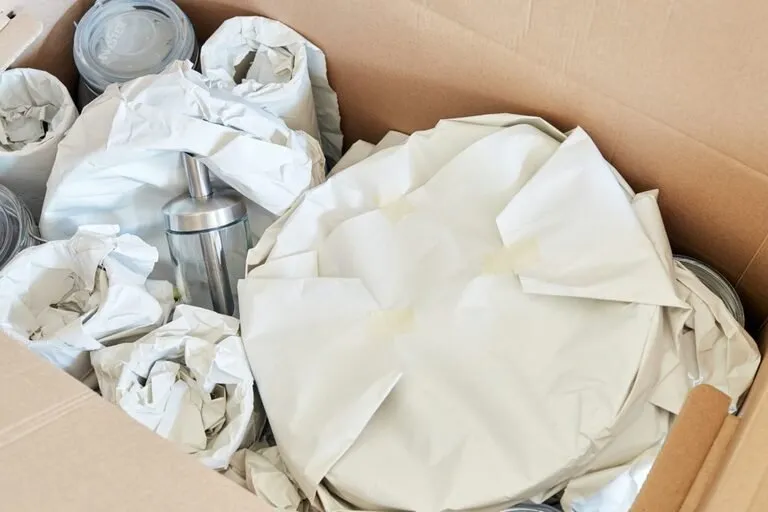
Moving is exciting but challenging at the same time. Some of the most fragile items in a household are dishes – plates, glasses, mugs and porcelain. Poor packing can lead to damage that could often have been easily prevented.
In this article you will learn how to prepare your dishes properly for a move so that they arrive safely and without cracks.
Prepare the packing materials you need
Before you start, make sure you have:
- sturdy cardboard or plastic boxes;
- bubble wrap;
- packing paper or unprinted paper;
- tape;
- a marker for labelling boxes;
- soft filling to fill empty spaces.
If possible, choose small or medium-sized boxes. Heavy boxes are harder to move and increase the risk of the contents breaking.
Reinforce the bottom of the box
Before putting dishes in, tape the bottom of the box carefully with several strips of tape. It is a good idea to line the bottom with a layer of paper or bubble wrap as extra cushioning.
Wrap each item separately
Wrap each plate, bowl or mug in its own layer of paper or bubble wrap.
Pay special attention to:
- porcelain;
- crystal glasses;
- decorative dishes;
- thin wine glasses.
The more fragile the item, the more protective material it needs.
Place plates upright
Many people think plates should be stacked on top of each other. In fact it is safer to place them upright – like vinyl records on a shelf.
This method reduces the pressure on the plates and significantly reduces the risk of breakage during transport.
Glasses and mugs
Pack glasses one at a time.
You can put crumpled paper inside to help keep their shape and absorb shocks. Place glasses in the box standing up, not lying down.
Take special care of mug handles, as they are the most sensitive part.
Fill the empty spaces
Once all the dishes are in the box, check that they don’t move.
Fill all empty spaces with:
- paper;
- bubble wrap;
- packing material;
- soft towels or textiles.
Items should not move freely during transport.
Don’t overload the boxes
Although it is tempting to put everything in one box, it is better to use several smaller ones.
The optimal weight is about 10–15 kg. This makes carrying easier and reduces the risk of the box breaking.
Label the boxes
Write clearly on each box:
- “Fragile”
- “Dishes”
- “This side up”
This helps the moving team know that these boxes need to be handled with particular care.
Pack valuable dishes separately
If you have family heirlooms, antiques or particularly valuable porcelain, it is best to pack them in separate boxes with extra protection.
If needed, use double boxing – placing a smaller box inside a larger one with cushioning material between them.
Leave the packing to professionals
If you are short of time or want maximum safety, professional movers can pack your dishes properly using suitable materials and proven methods.
This is especially useful if you are moving a large number of fragile items or moving over a longer distance.
Frequently asked questions
Is newspaper suitable for packing dishes?
It is not recommended. Newspaper ink can stain the dishes. Clean packing paper or bubble wrap is better.
How heavy should a box of dishes be?
It is best not to exceed 10–15 kg, so the box is easy to move and the risk of damage is lower.
Is it better to place plates horizontally or vertically?
It is safer to place them vertically, as this reduces the pressure and the chance of them breaking.
Can I use towels for packing?
Yes. Towels, blankets and other soft textiles are great for filling empty spaces and adding extra protection.
In conclusion
Packing dishes properly is one of the most important steps in a successful move. By using quality packing materials, not overloading boxes and carefully protecting each item, you significantly reduce the risk of damage.
If you want to save time and be sure your belongings are safe, a professional moving company can take care of both packing and transport, making sure your dishes arrive at your new home safe and undamaged.